
Insights
Corporate Event Execution Starts With Command, Not a Checklist
Corporate Event Execution Starts With Command, Not a Checklist
A checklist tells you what's supposed to happen. It doesn't tell you who decides when something goes wrong. PlanoIDE structures event-day execution so the plan survives contact with the room.
A checklist tells you what's supposed to happen. It doesn't tell you who decides when something goes wrong. PlanoIDE structures event-day execution so the plan survives contact with the room.
A plan survives contact with a room for about as long as it takes the first vendor to arrive late. We've watched it happen with catering trucks stuck at a loading dock, a keynote speaker's flight delayed two hours, a venue's AV system that worked at the walkthrough and failed on the day. Planning and execution are two different disciplines. Most corporate teams only staff for the first one.
Execution is where a strategy either holds or doesn't.
Everything decided in the Discover, Develop, and Plan stages faces its real test here, in front of the people the event was built for. We see this stage underinvested most often, because a checklist looks like a plan and isn't one. A checklist lists what should happen. It says nothing about who decides when something on it breaks.

Execution Is Where Strategy Meets Risk
A checklist is a list of tasks. It tells you what needs to happen and when. It doesn't tell you who decides, at 9:47 AM with guests already arriving, whether to hold the opening five minutes for a delayed VIP or start on time and brief them when they land.
This is a command gap, not a planning gap.
Every corporate event carries risk the day it's approved: vendor risk, weather risk, speaker risk, technology risk. The objective-setting work we described in our earlier piece on why planning starts with objective, not venue determines what the event needs to achieve. Execution determines whether it still achieves that when something doesn't go to plan.
One Run of Show, One Owner
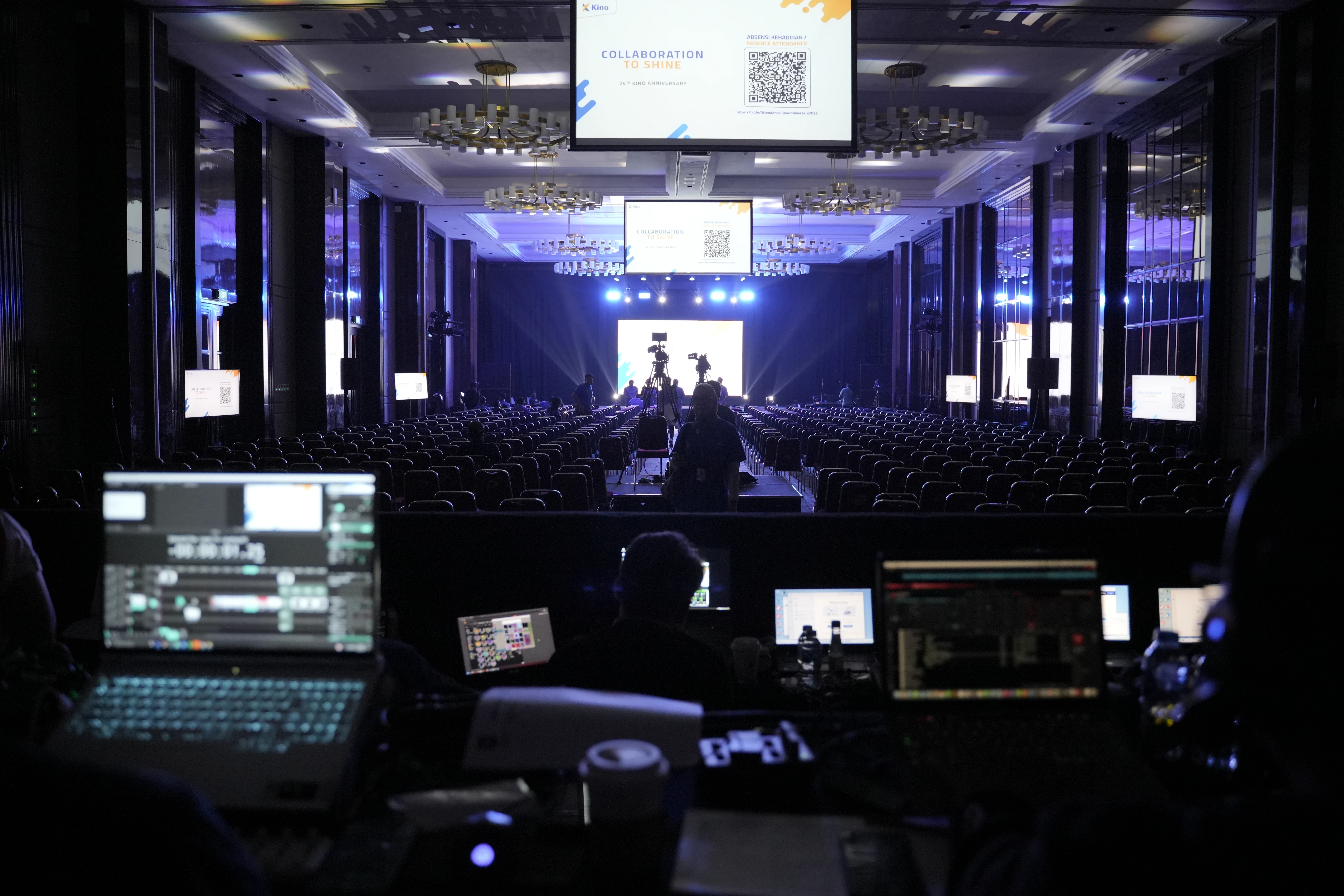
The run of show is the backbone of event-day execution: a minute-by-minute document that sequences speakers, AV cues, catering windows, transitions, and vendor actions into a single timeline everyone works from. Most teams have one. Fewer teams have a single person with authority to change it mid-event.
Single-point accountability on the floor is non-negotiable. When a room fills faster than the registration desk can process badges, or a speaker's slides won't load with three minutes to curtain, someone needs to make the call without convening a committee. We assign this role in writing, before doors open, usually to an event director or a named on-site lead, and every vendor and internal stakeholder knows who that person is before the first guest arrives.
Without that clarity, decisions default to whoever's loudest in the room. That's rarely the person with the full picture.
Vendor Coordination Starts at Load-In
Every vendor an event brings in, catering, AV, décor, production, security, is a dependency. Each one introduces risk the moment the team stops watching it. The coordination that prevents a vendor delay from becoming a guest-facing problem starts at load-in, not show time.
We confirm every vendor's arrival against the approved timeline as it happens, not on trust. When a production crew says they'll be on-site by 6 AM, we log when they arrive. The gap between promised and actual is the first signal the day is drifting off schedule, while there's still time to absorb it.
A few things we check without exception before any vendor touches the floor:
Confirmed arrival window, cross-checked against the run of show
A named point of contact on-site, not just a phone number for their office
A walkthrough for any vendor unfamiliar with the venue, done in advance, not on the day
A backup, especially for AV, that can be activated without a renegotiation
That last one matters more than it sounds. The events that recover from a vendor failure are almost always the ones that already answered "what do we do if this doesn't show up" before it became a live question.
Build the Buffer Before You Need It
A tight budget and a tight schedule feel efficient right up until the first delay, and then they feel like a crisis. We build in a 10-15% buffer on budget and schedule as a baseline, higher for events with outdoor components, multiple vendors, or a venue the team hasn't run in before.
That buffer isn't padding. A fifteen-minute catering delay stays invisible to guests with it in place. Without it, that same delay pushes back a CEO keynote in front of three hundred people. The buffer lets execution absorb reality without the audience knowing something went sideways.
Teams that skip this step are betting nothing will go wrong, on the single day with the most moving parts in the event's lifecycle.
What to Do When the Plan Breaks
Something will not go to plan. Across every event our team has run for clients in the Pertamina and Astra Life tier, that's held true, in different, mostly minor, ways each time. A smooth event and a visibly chaotic one differ on one thing: whether the team already has an answer ready before the problem shows up.
Before any event we run, we answer three questions in writing, not improvise them on the day:
Who decides, if the on-site lead is unreachable for ten minutes during a critical window?
What's the fallback, for the two or three failure points most likely to happen: AV, a late VIP, weather for outdoor segments?
Who tells the client, and when, if something needs to change from what was promised?
This isn't dramatic. It reads closer to a pilot's pre-flight checklist than a crisis playbook, and most of it sits unused. The events where it wasn't written down are the ones where a minor issue turns into a visible one, in front of the exact audience the event was built to impress.
Close the Loop: From Execute to Measure
Execution doesn't end when the last guest leaves. The debrief window is when the team compares what happened against the run of show, logs every deviation, and captures it while it's still fresh. We book that window before the event starts, not whenever someone finds time the following week.
That debrief also feeds the next stage of the methodology: Measure. The post-event evaluation runs on what held, what slipped, and why. Skip the debrief, and that evaluation runs on memory instead of record.
What to Do Now
If your last event's post-mortem sounded more like "we got lucky" than "the plan held," look at who owned execution, and whether that person had the authority, and the buffer, to make the calls that mattered.
Our team builds this structure into every event we run, from the run of show down to who's named as the on-site decision-maker. Talk to us about what your next event needs to hold up under pressure. We'll walk through your event's specific risk points before you're standing in the room finding out about them live.
Stay Inspired
Get fresh design insights, articles, and resources delivered straight to your inbox.
Latest Blogs





Contact us
Get in touch and let’s turn concepts into stunning event
Transforming ideas into reality
Insights
Corporate Event Execution Starts With Command, Not a Checklist
Corporate Event Execution Starts With Command, Not a Checklist
A checklist tells you what's supposed to happen. It doesn't tell you who decides when something goes wrong. PlanoIDE structures event-day execution so the plan survives contact with the room.
A checklist tells you what's supposed to happen. It doesn't tell you who decides when something goes wrong. PlanoIDE structures event-day execution so the plan survives contact with the room.
A plan survives contact with a room for about as long as it takes the first vendor to arrive late. We've watched it happen with catering trucks stuck at a loading dock, a keynote speaker's flight delayed two hours, a venue's AV system that worked at the walkthrough and failed on the day. Planning and execution are two different disciplines. Most corporate teams only staff for the first one.
Execution is where a strategy either holds or doesn't.
Everything decided in the Discover, Develop, and Plan stages faces its real test here, in front of the people the event was built for. We see this stage underinvested most often, because a checklist looks like a plan and isn't one. A checklist lists what should happen. It says nothing about who decides when something on it breaks.
Execution Is Where Strategy Meets Risk
A checklist is a list of tasks. It tells you what needs to happen and when. It doesn't tell you who decides, at 9:47 AM with guests already arriving, whether to hold the opening five minutes for a delayed VIP or start on time and brief them when they land.
This is a command gap, not a planning gap.
Every corporate event carries risk the day it's approved: vendor risk, weather risk, speaker risk, technology risk. The objective-setting work we described in our earlier piece on why planning starts with objective, not venue determines what the event needs to achieve. Execution determines whether it still achieves that when something doesn't go to plan.
One Run of Show, One Owner
The run of show is the backbone of event-day execution: a minute-by-minute document that sequences speakers, AV cues, catering windows, transitions, and vendor actions into a single timeline everyone works from. Most teams have one. Fewer teams have a single person with authority to change it mid-event.
Single-point accountability on the floor is non-negotiable. When a room fills faster than the registration desk can process badges, or a speaker's slides won't load with three minutes to curtain, someone needs to make the call without convening a committee. We assign this role in writing, before doors open, usually to an event director or a named on-site lead, and every vendor and internal stakeholder knows who that person is before the first guest arrives.
Without that clarity, decisions default to whoever's loudest in the room. That's rarely the person with the full picture.
Vendor Coordination Starts at Load-In
Every vendor an event brings in, catering, AV, décor, production, security, is a dependency. Each one introduces risk the moment the team stops watching it. The coordination that prevents a vendor delay from becoming a guest-facing problem starts at load-in, not show time.
We confirm every vendor's arrival against the approved timeline as it happens, not on trust. When a production crew says they'll be on-site by 6 AM, we log when they arrive. The gap between promised and actual is the first signal the day is drifting off schedule, while there's still time to absorb it.
A few things we check without exception before any vendor touches the floor:
Confirmed arrival window, cross-checked against the run of show
A named point of contact on-site, not just a phone number for their office
A walkthrough for any vendor unfamiliar with the venue, done in advance, not on the day
A backup, especially for AV, that can be activated without a renegotiation
That last one matters more than it sounds. The events that recover from a vendor failure are almost always the ones that already answered "what do we do if this doesn't show up" before it became a live question.
Build the Buffer Before You Need It
A tight budget and a tight schedule feel efficient right up until the first delay, and then they feel like a crisis. We build in a 10-15% buffer on budget and schedule as a baseline, higher for events with outdoor components, multiple vendors, or a venue the team hasn't run in before.
That buffer isn't padding. A fifteen-minute catering delay stays invisible to guests with it in place. Without it, that same delay pushes back a CEO keynote in front of three hundred people. The buffer lets execution absorb reality without the audience knowing something went sideways.
Teams that skip this step are betting nothing will go wrong, on the single day with the most moving parts in the event's lifecycle.
What to Do When the Plan Breaks
Something will not go to plan. Across every event our team has run for clients in the Pertamina and Astra Life tier, that's held true, in different, mostly minor, ways each time. A smooth event and a visibly chaotic one differ on one thing: whether the team already has an answer ready before the problem shows up.
Before any event we run, we answer three questions in writing, not improvise them on the day:
Who decides, if the on-site lead is unreachable for ten minutes during a critical window?
What's the fallback, for the two or three failure points most likely to happen: AV, a late VIP, weather for outdoor segments?
Who tells the client, and when, if something needs to change from what was promised?
This isn't dramatic. It reads closer to a pilot's pre-flight checklist than a crisis playbook, and most of it sits unused. The events where it wasn't written down are the ones where a minor issue turns into a visible one, in front of the exact audience the event was built to impress.
Close the Loop: From Execute to Measure
Execution doesn't end when the last guest leaves. The debrief window is when the team compares what happened against the run of show, logs every deviation, and captures it while it's still fresh. We book that window before the event starts, not whenever someone finds time the following week.
That debrief also feeds the next stage of the methodology: Measure. The post-event evaluation runs on what held, what slipped, and why. Skip the debrief, and that evaluation runs on memory instead of record.
What to Do Now
If your last event's post-mortem sounded more like "we got lucky" than "the plan held," look at who owned execution, and whether that person had the authority, and the buffer, to make the calls that mattered.
Our team builds this structure into every event we run, from the run of show down to who's named as the on-site decision-maker. Talk to us about what your next event needs to hold up under pressure. We'll walk through your event's specific risk points before you're standing in the room finding out about them live.
Stay Inspired
Get fresh design insights, articles, and resources delivered straight to your inbox.
Latest Blogs

©PlanoIDE 2026 | All Rights Reserved
Insights
Corporate Event Execution Starts With Command, Not a Checklist
Corporate Event Execution Starts With Command, Not a Checklist
A checklist tells you what's supposed to happen. It doesn't tell you who decides when something goes wrong. PlanoIDE structures event-day execution so the plan survives contact with the room.
A checklist tells you what's supposed to happen. It doesn't tell you who decides when something goes wrong. PlanoIDE structures event-day execution so the plan survives contact with the room.
A plan survives contact with a room for about as long as it takes the first vendor to arrive late. We've watched it happen with catering trucks stuck at a loading dock, a keynote speaker's flight delayed two hours, a venue's AV system that worked at the walkthrough and failed on the day. Planning and execution are two different disciplines. Most corporate teams only staff for the first one.
Execution is where a strategy either holds or doesn't.
Everything decided in the Discover, Develop, and Plan stages faces its real test here, in front of the people the event was built for. We see this stage underinvested most often, because a checklist looks like a plan and isn't one. A checklist lists what should happen. It says nothing about who decides when something on it breaks.
Execution Is Where Strategy Meets Risk
A checklist is a list of tasks. It tells you what needs to happen and when. It doesn't tell you who decides, at 9:47 AM with guests already arriving, whether to hold the opening five minutes for a delayed VIP or start on time and brief them when they land.
This is a command gap, not a planning gap.
Every corporate event carries risk the day it's approved: vendor risk, weather risk, speaker risk, technology risk. The objective-setting work we described in our earlier piece on why planning starts with objective, not venue determines what the event needs to achieve. Execution determines whether it still achieves that when something doesn't go to plan.
One Run of Show, One Owner
The run of show is the backbone of event-day execution: a minute-by-minute document that sequences speakers, AV cues, catering windows, transitions, and vendor actions into a single timeline everyone works from. Most teams have one. Fewer teams have a single person with authority to change it mid-event.
Single-point accountability on the floor is non-negotiable. When a room fills faster than the registration desk can process badges, or a speaker's slides won't load with three minutes to curtain, someone needs to make the call without convening a committee. We assign this role in writing, before doors open, usually to an event director or a named on-site lead, and every vendor and internal stakeholder knows who that person is before the first guest arrives.
Without that clarity, decisions default to whoever's loudest in the room. That's rarely the person with the full picture.
Vendor Coordination Starts at Load-In
Every vendor an event brings in, catering, AV, décor, production, security, is a dependency. Each one introduces risk the moment the team stops watching it. The coordination that prevents a vendor delay from becoming a guest-facing problem starts at load-in, not show time.
We confirm every vendor's arrival against the approved timeline as it happens, not on trust. When a production crew says they'll be on-site by 6 AM, we log when they arrive. The gap between promised and actual is the first signal the day is drifting off schedule, while there's still time to absorb it.
A few things we check without exception before any vendor touches the floor:
Confirmed arrival window, cross-checked against the run of show
A named point of contact on-site, not just a phone number for their office
A walkthrough for any vendor unfamiliar with the venue, done in advance, not on the day
A backup, especially for AV, that can be activated without a renegotiation
That last one matters more than it sounds. The events that recover from a vendor failure are almost always the ones that already answered "what do we do if this doesn't show up" before it became a live question.
Build the Buffer Before You Need It
A tight budget and a tight schedule feel efficient right up until the first delay, and then they feel like a crisis. We build in a 10-15% buffer on budget and schedule as a baseline, higher for events with outdoor components, multiple vendors, or a venue the team hasn't run in before.
That buffer isn't padding. A fifteen-minute catering delay stays invisible to guests with it in place. Without it, that same delay pushes back a CEO keynote in front of three hundred people. The buffer lets execution absorb reality without the audience knowing something went sideways.
Teams that skip this step are betting nothing will go wrong, on the single day with the most moving parts in the event's lifecycle.
What to Do When the Plan Breaks
Something will not go to plan. Across every event our team has run for clients in the Pertamina and Astra Life tier, that's held true, in different, mostly minor, ways each time. A smooth event and a visibly chaotic one differ on one thing: whether the team already has an answer ready before the problem shows up.
Before any event we run, we answer three questions in writing, not improvise them on the day:
Who decides, if the on-site lead is unreachable for ten minutes during a critical window?
What's the fallback, for the two or three failure points most likely to happen: AV, a late VIP, weather for outdoor segments?
Who tells the client, and when, if something needs to change from what was promised?
This isn't dramatic. It reads closer to a pilot's pre-flight checklist than a crisis playbook, and most of it sits unused. The events where it wasn't written down are the ones where a minor issue turns into a visible one, in front of the exact audience the event was built to impress.
Close the Loop: From Execute to Measure
Execution doesn't end when the last guest leaves. The debrief window is when the team compares what happened against the run of show, logs every deviation, and captures it while it's still fresh. We book that window before the event starts, not whenever someone finds time the following week.
That debrief also feeds the next stage of the methodology: Measure. The post-event evaluation runs on what held, what slipped, and why. Skip the debrief, and that evaluation runs on memory instead of record.
What to Do Now
If your last event's post-mortem sounded more like "we got lucky" than "the plan held," look at who owned execution, and whether that person had the authority, and the buffer, to make the calls that mattered.
Our team builds this structure into every event we run, from the run of show down to who's named as the on-site decision-maker. Talk to us about what your next event needs to hold up under pressure. We'll walk through your event's specific risk points before you're standing in the room finding out about them live.
Stay Inspired
Get fresh design insights, articles, and resources delivered straight to your inbox.
Latest Blogs
Get in touch and let’s turn concepts into stunning event
Transforming ideas into reality
info@plano-ide.com